
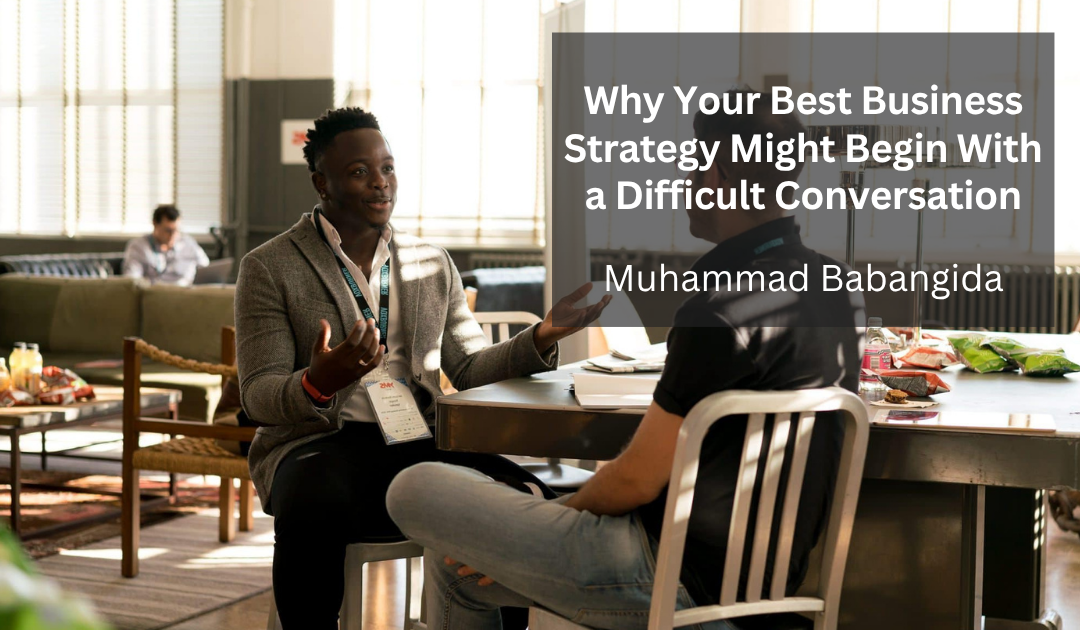
In business, strategy is often associated with growth plans, market research, financial forecasts, and competitive analysis. But some of the most important strategic breakthroughs begin somewhere much less comfortable: a difficult conversation.
Leaders often spend considerable time studying external challenges while overlooking the conversations happening—or not happening—inside their own organizationsReports can tell you that sales are declining. They may show that customer retention is falling or that project deadlines. Yet an honest discussion about poor performance, outdated processes, customer dissatisfaction, team conflict, or an uncomfortable business reality can reveal more than another spreadsheet ever will.
Difficult Conversations Reveal What the Numbers Hide
Reports can tell you that sales are declining. They may show that customer retention is falling or that project deadlines are consistently being missed. But numbers rarely explain why.
That answer often emerges when someone is willing to ask uncomfortable questions.
Why are customers leaving?
Why does the team keep missing the same targets?
Why are employees afraid to challenge a particular decision?
Why are we continuing to invest in something that no longer delivers results?
These questions can create tension, but they can also expose the assumptions holding a business back. A difficult conversation turns a problem from something people quietly work around into something the organization can actually address.
Silence Can Become an Expensive Strategy
Avoiding uncomfortable conversations may feel like maintaining stability. In reality, silence can allow small issues to become major strategic problems.
A manager who avoids addressing an underperforming employee may eventually lose a strong team member because of frustration. A leadership team that refuses to discuss declining demand may continue investing in an outdated product. A company that ignores customer complaints may eventually discover that competitors have already solved the problem.
The longer an issue remains unspoken, the more difficult—and expensive—it can become to fix.
Good strategy therefore isn’t only about deciding what to do. It is also about having the courage to acknowledge what isn’t working.
The Best Conversations Challenge Assumptions
A productive difficult conversation isn’t about assigning blame. It is about testing assumptions.
Perhaps the company believes customers care most about price, when they actually value convenience. Maybe leadership assumes employees resist change, when the real problem is poor communication. Perhaps a team is considered inefficient when it is actually working around a flawed process.
When leaders create space for these perspectives, they can discover opportunities hidden inside problems.
This is where difficult conversations become strategic. They don’t simply identify weaknesses; they can change the way a business understands its market, people, and priorities.
Turning Honesty Into Action
Of course, having an honest conversation is only the beginning. Its value comes from what happens afterward.
Leaders need to listen without immediately becoming defensive, separate facts from assumptions, and identify what can realistically change. The goal should be clarity, not simply agreement.
A useful conversation should eventually lead to better questions, clearer priorities, and specific action. If customers are frustrated, what needs to change? If employees are disengaged, what is causing it? If a strategy is no longer producing results, what should replace it?
The answers may not always be comfortable, but they can provide a much stronger foundation for decision-making.
Strategy Starts With Reality
The strongest strategies are not built around what leaders want to be true. They are built around what is actually happening.
Sometimes discovering that reality requires a conversation nobody wants to start.
That conversation might challenge a senior leader, question a popular strategy, expose a weakness in the organization, or force a team to admit that an old approach is no longer working. But uncomfortable truth is often more valuable than comfortable assumptions.
The next breakthrough in your business may not begin with a new strategy document. It may begin with someone finally asking the question everyone has been avoiding.