
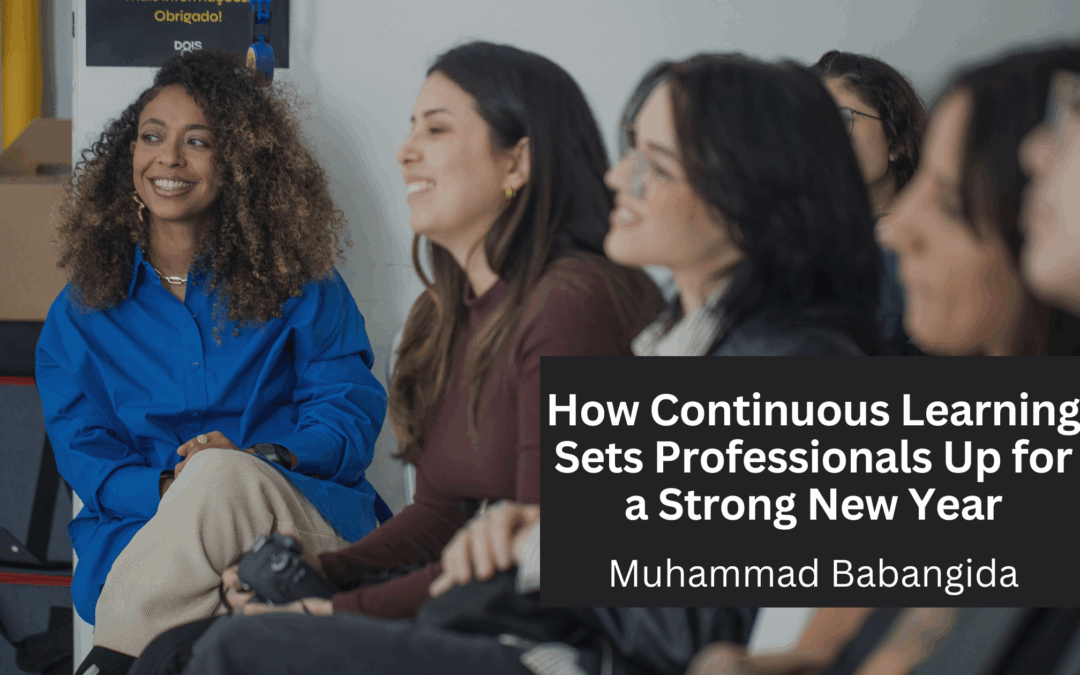
As one year winds down and another approaches, professionals often reflect on goals, performance, and aspirations. New Year resolutions commonly focus on productivity, health, or career advancement, yet one habit consistently underpins long-term professional success: continuous learning. In a business environment defined by rapid change, evolving technology, and shifting expectations, the commitment to ongoing education is no longer optional. It is a strategic advantage that positions professionals to enter the New Year prepared, confident, and adaptable.
The Modern Workplace Rewards Adaptability
Industries today evolve faster than ever. New tools emerge, regulations shift, and market dynamics change with little warning. Professionals who rely solely on past experience risk falling behind, regardless of their tenure or expertise. Continuous learning ensures that skills remain relevant and that professionals can respond effectively to new challenges.
Whether it involves staying current with digital tools, understanding emerging trends, or developing leadership capabilities, learning creates flexibility. Entering the New Year with updated knowledge allows professionals to approach opportunities proactively rather than reactively.
Learning Builds Confidence and Momentum
One of the most underestimated benefits of continuous learning is confidence. Gaining new skills or insights reinforces a sense of competence and control, particularly during periods of transition. When professionals invest in learning at the end of the year, they begin the next one with momentum already in place.
This confidence extends beyond technical knowledge. Learning sharpens critical thinking, improves communication, and enhances decision-making. As a result, professionals are better equipped to contribute meaningfully in meetings, lead initiatives, and navigate uncertainty with clarity.
Strategic Learning Beats Reactive Resolutions
Many professionals set broad New Year resolutions such as “get promoted” or “be more productive.” While well intentioned, these goals often lack a clear execution path. Continuous learning offers a more practical framework by focusing on skill acquisition and knowledge growth that directly supports career objectives.
Instead of reacting to gaps when challenges arise, professionals who commit to learning anticipate future needs. For example, strengthening financial literacy, improving data interpretation, or developing emotional intelligence can have immediate and long-term impact across roles and industries.
Learning Strengthens Professional Value
In competitive environments, professional value is defined by relevance and contribution. Continuous learning enhances both. By expanding expertise and staying informed, professionals increase their ability to solve problems, innovate, and add measurable value to their organizations.
This is especially important as organizations increasingly prioritize agility and cross-functional thinking. Employees who demonstrate curiosity and a willingness to learn are often seen as high-potential contributors and future leaders. Entering the New Year with an active learning mindset signals commitment, growth, and long-term value.
Personal Development Fuels Career Growth
Continuous learning is not limited to formal courses or certifications. Reading industry insights, attending workshops, seeking mentorship, or reflecting on experiences all contribute to professional development. These habits encourage self-awareness and personal growth, which are essential for sustainable success.
As the New Year begins, professionals who have invested in learning are better positioned to set realistic goals aligned with their strengths and interests. This alignment reduces burnout and increases engagement, making progress more sustainable throughout the year.
Creating a Learning Rhythm for the Year Ahead
A strong New Year does not require an aggressive learning agenda. Consistency matters more than intensity. Small, regular investments in learning—such as dedicating time each week to skill development or industry reading—compound over time.
Professionals who view learning as an ongoing practice rather than a seasonal effort are more likely to maintain progress. By integrating learning into daily routines, they transform growth from a resolution into a habit.
Entering the New Year Equipped, Not Overwhelmed
Continuous learning provides clarity in a complex professional landscape. It reduces anxiety by replacing uncertainty with preparation and replaces stagnation with progress. As the New Year begins, professionals who prioritize learning step forward equipped with updated skills, renewed confidence, and a clear sense of direction.
Ultimately, continuous learning is not just about staying competitive—it is about staying capable. By embracing learning as a core professional discipline, individuals set themselves up not only for a strong New Year, but for sustained success in the years ahead.